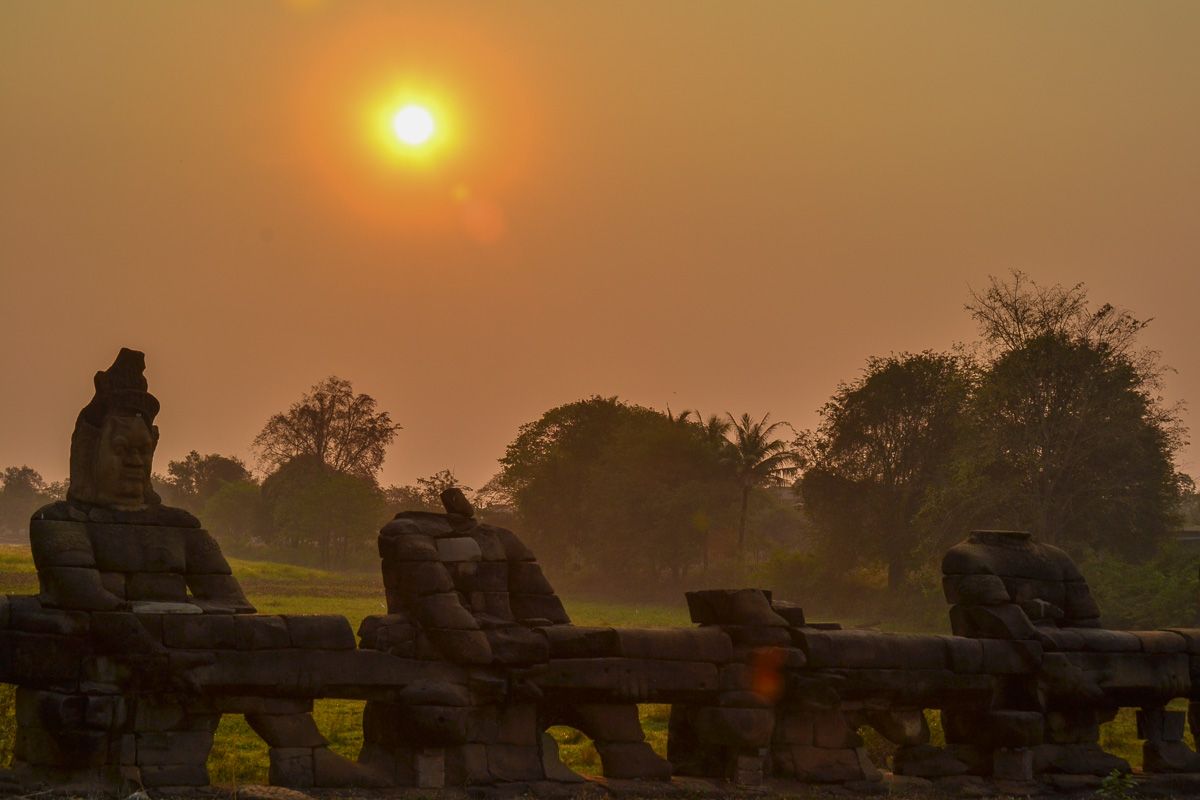
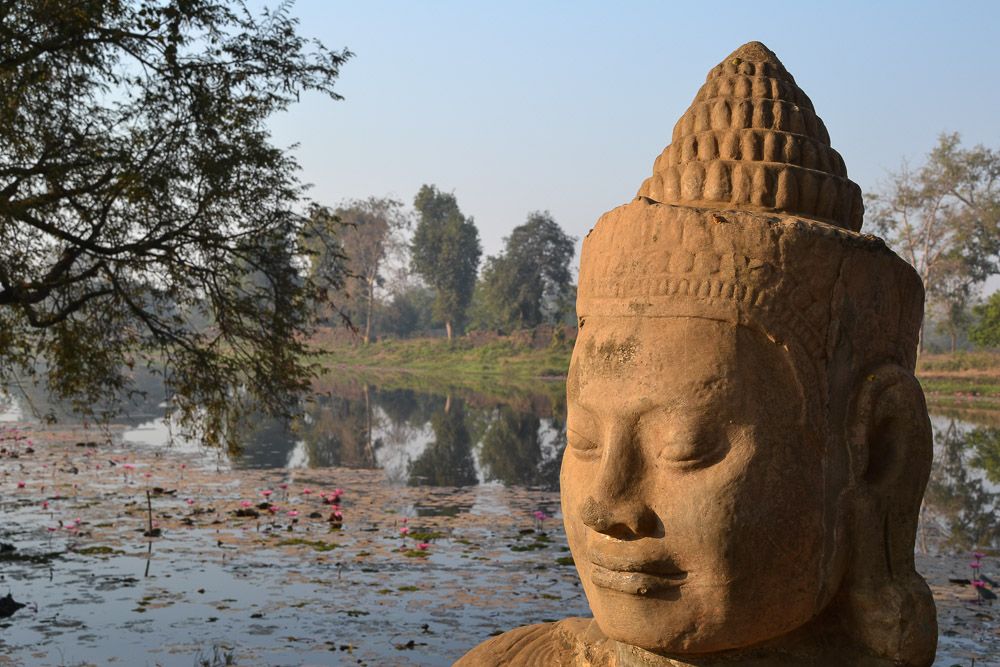
The temple, its moat, its baray (reservoir) and the unspoilt countryside around them make up a unique archaeological site and a vital link in Cambodia’s cultural heritage. That is why Banteay Chhmar is now one of Cambodia’s top priorities for inscription as a UNESCO World Heritage site.
Its remoteness from Angkor Wat partly explains why the temple has been so little documented and studied. The Ministry of Culture & Fine Arts (MCFA) oversees the temple complex.
Banteay Chhmar is the fourth-largest temple of the Angkorian period, after Preah Khan (in Kampong Svay), Angkor Thom and Angkor Wat. The complex includes nine satellite temples, and Banteay Torp, another intriguing temple well worth seeing, is about 12 km south of the main temple.
The “Citadel of the Cat”
No recorded or written name for the temple survives. Scholars generally believe Banteay Chhmar probably meant “the small citadel” or “narrow fortress”, from a Khmer word (possibly chhmarl or chmarl) meaning small, tiny or narrow. Over time, probably as it was passed on by word of mouth, the name became chhmar: cat. So today the temple is commonly called the “Citadel of the Cat”. These references are not well understood and need more research.
Jayavarman VII and the four guardians
What is known is that King Jayavarman VII commissioned the temple in the late 12th to early 13th century. A shrine in the temple once held an image of a Crown Prince, believed to be Indravarman and probably a son of Jayavarman VII. A Khmer inscription found at the site, now in the National Museum in Phnom Penh, tells how this prince was saved on two occasions by four royal servants, all of whom died defending him. The inscription names them, and says their images once stood in the four corners of the shrine.
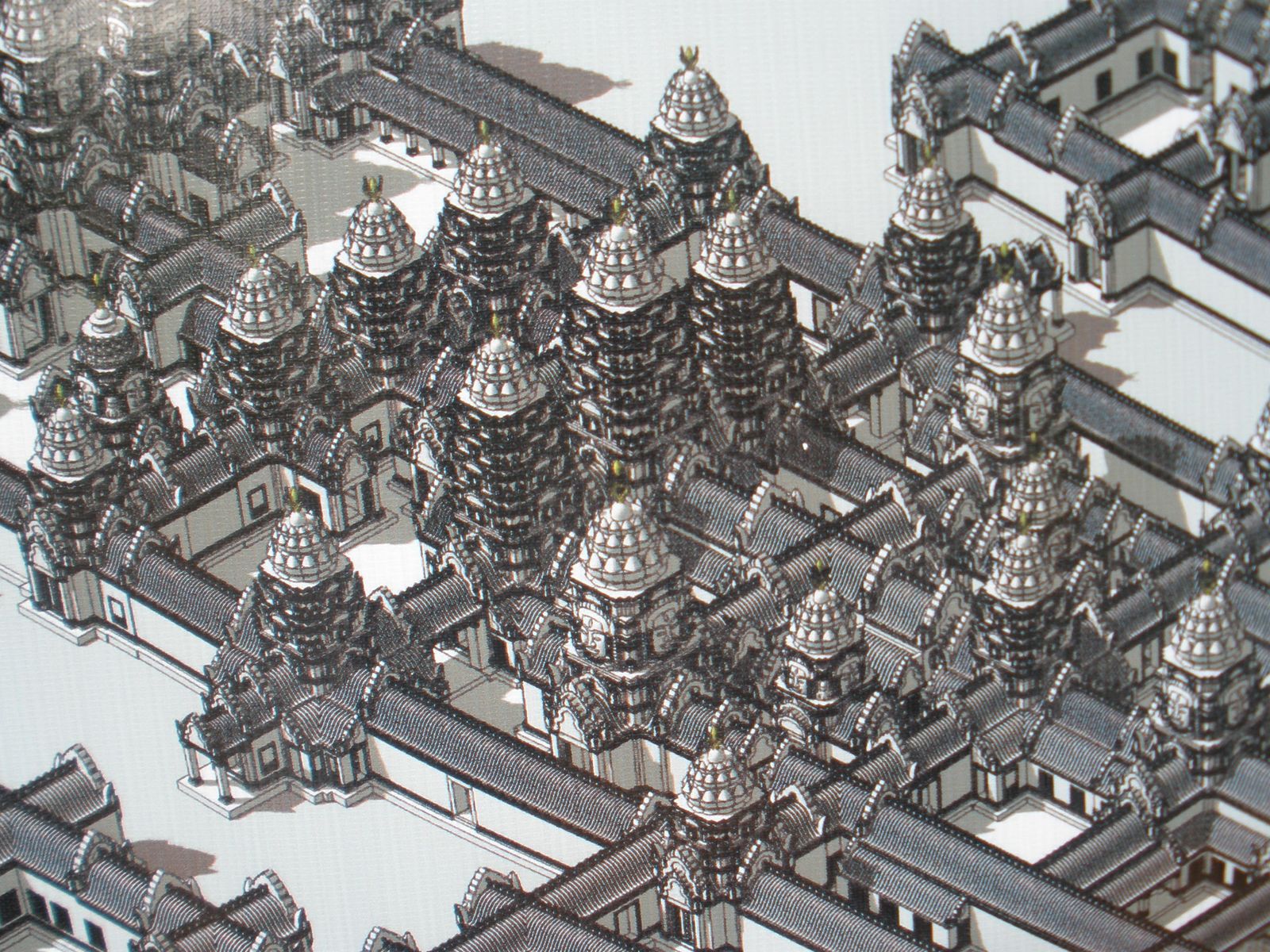
Reconstructing the temple
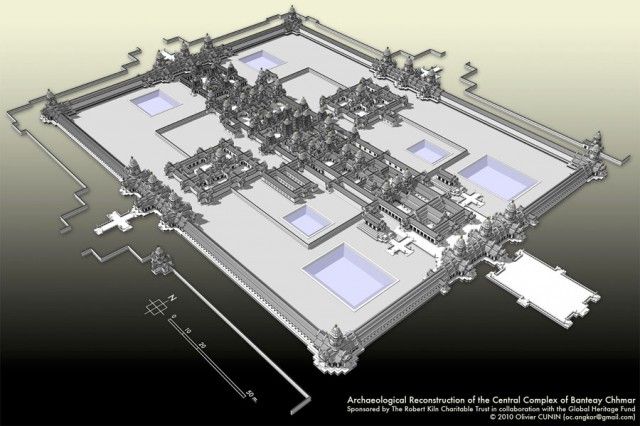
Dr. Olivier Cunin, an independent scholar, spent ten years studying Banteay Chhmar and other temples across Cambodia, and his work has been invaluable to what we know about the complex today. Watch his talk “The Small Citadel: Reconstructing the Ruined Buddhist Complex of Banteay Chhmar”, given at the Smithsonian Institution in Washington D.C. in October 2010.
Face towers and bas-reliefs
The temple is similar in style to the Bayon, which Jayavarman VII also commissioned, and it is one of only two sites outside the Bayon with the enigmatic face towers. The outer gallery walls are covered in bas-reliefs of military and domestic scenes, also like the Bayon. Laid end to end, they would stretch for nearly a kilometre.
First aired in 2012, an Al Jazeera special on UNESCO World Heritage sites in Cambodia, Laos and Vietnam looks at Banteay Chhmar as a potential World Heritage site, and what that may mean for the future of the area.
Visiting
The entrance fee is $5 per person. It covers several days and includes all the satellite temples and Banteay Torp. Children under 12 are free. Local guides can show you around: see Tour Guides and Prices at a glance.